
Many people think of confidence as a personality trait—something you’re either born with or without, or something that’s ingrained in you through upbringing. I’m on the side of those who believe that confidence is a skill, and like any skill, it can be developed. No matter where we start, we can make significant progress in this area. Since confidence is a recurring topic in my coaching sessions, I’d like to share a few tips that have worked well for my clients.
In another post, I discuss what confidence really means and how it’s linked to the opportunities we encounter. Here, I want to highlight an important aspect of confidence, using a coaching case as an example, to show how you can either build or undermine your confidence.
When Good Isn’t Good Enough
One of my clients is a high-level executive. She loves her job and makes a conscious effort to do it well. Working with her is easy because she has a strong sense of self-awareness and can deeply and honestly reflect on her behavior.
She had the opportunity to attend a special training, which she really enjoyed… but she wasn’t satisfied with her own performance during the training. This isn’t uncommon for her (in coaching, we call this a pattern); she had previously mentioned an event where, despite putting in a lot of effort and contributing actively, she still felt dissatisfied.
I asked her when she would have been satisfied with her performance. She couldn’t quite answer. Then, I remembered that she usually feels satisfied at the end of our coaching sessions. We began discussing why it’s easy for her to feel satisfied during our sessions. She quickly realized that at the beginning of our coaching sessions, we set a clear goal to work towards, and we define what success will look like by the end of the session.
We decided to test whether this approach would work for her in her day-to-day work. We looked at the challenging situations she would face in the near future and considered what outcomes would make her feel satisfied in those situations. She even gave it a name—she calls it her „A-bar.”
At our next session, she reported how well things had gone. Her energy was completely different, and her focus had shifted: instead of a negative tone, she spoke with pride about how well she could bring out what she wanted from herself.
Is That All It Takes?
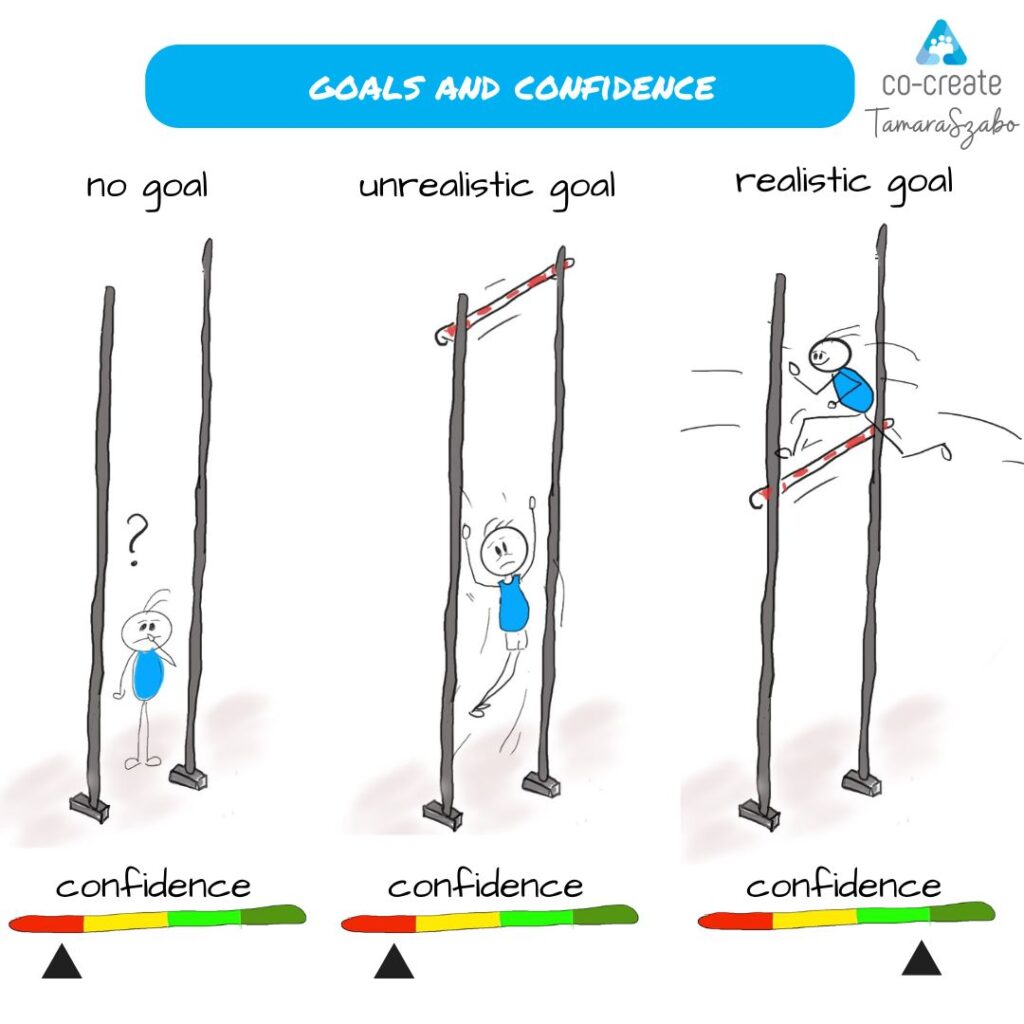
Sometimes, yes. If we don’t set goals, we can easily fall into the trap of undervaluing our own performance. But if we do set goals, we gain a much more objective view of whether we achieved what we wanted.
What’s the Takeaway?
When you face a challenging situation, take a moment to think about how you’d like to come out of it. What would make you happy if it happened? When will you feel satisfied? Don’t be too hard on yourself; instead, set realistic goals. These goals can be challenging, but don’t expect superhuman results from yourself.
Is there a situation coming up in the next few weeks that will be challenging in some way? What would make you happy? What’s your A-bar?
Tamara Szabó
OD consultant, trainer, coach (MCC), team coach